
Light, <em>measured.</em>
What each wavelength does, why stated specifications drift, and how we verify output before a unit leaves the line.
Depth decides the claim you can make.
Light of different wavelengths is absorbed and scattered differently as it passes through tissue. Shorter wavelengths are absorbed near the surface; longer ones travel further before being absorbed. This is the single most important technical distinction in a light therapy device, because it decides which claims are defensible and which are marketing language.
It is also why a mask advertising "seven colors" is not automatically comparable to another mask advertising the same seven. Mode count is a feature list. Wavelength accuracy and delivered irradiance are the specification.
What we will publish here
A cross-section diagram showing the approximate target layer for each wavelength in our platform. Depth bands are indicative; the measured wavelength and irradiance for a specific unit are stated in its optical test report.
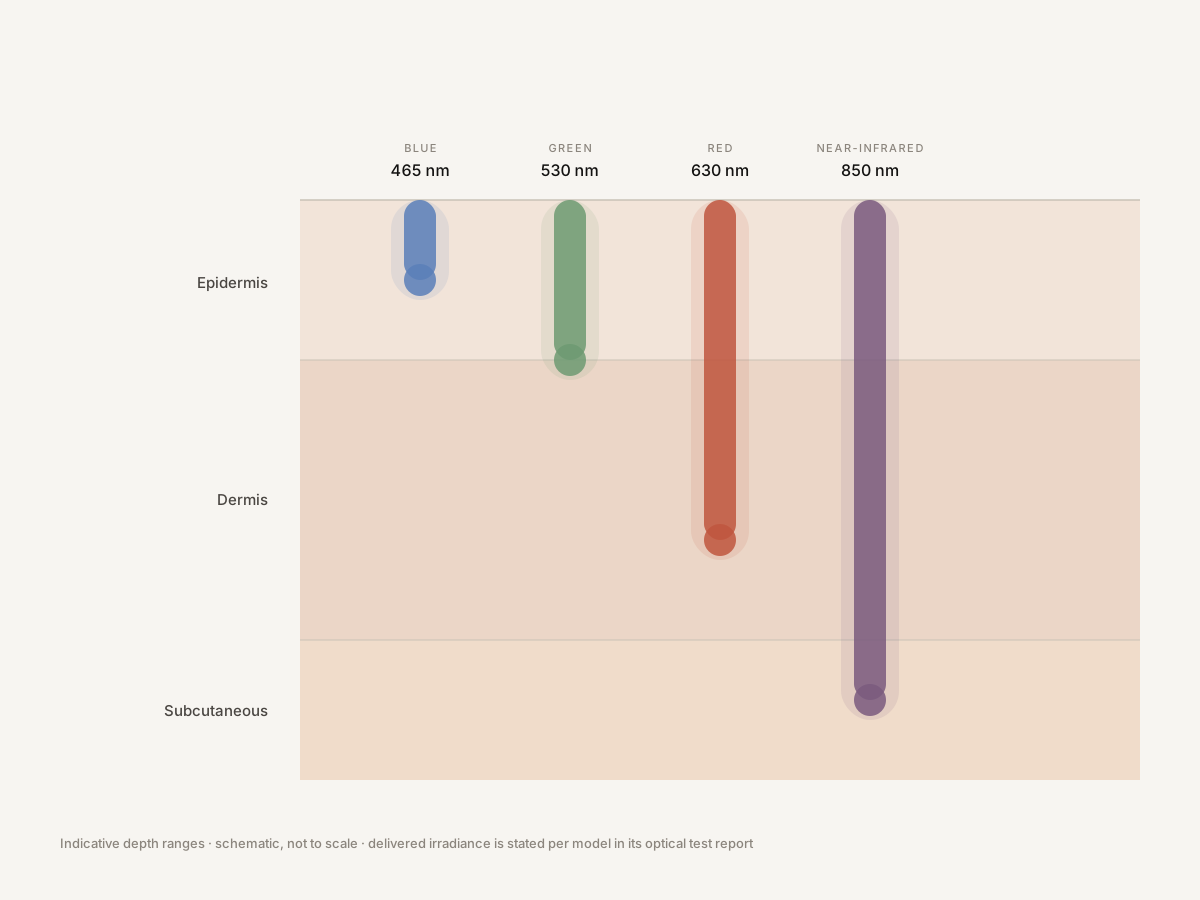
The five bands in our platform, and what each is for.
630nm — Red
The most commonly specified band in at-home devices and the one most buyers ask about first. It sits in the range generally associated with firming and post-treatment recovery positioning. Present in every model in our LED line.
460nm — Blue
A shorter wavelength that acts closer to the surface. Used in blemish-focused positioning and almost always paired with red in a multi-mode mask rather than sold as a standalone claim.
590nm — Yellow
A softer band often positioned toward sensitive-skin and redness narratives. Adds perceived range to a mode list and rounds out the middle of the spectrum between blue and red.
520nm — Green
The least differentiated band commercially. Its main function in a consumer SKU is completing a seven-color mode list, which is why buyers should weigh mode count against the bands they will actually market.
850nm — Infrared
Invisible to the eye and positioned deeper than red. This is usually the band that separates a premium or clinical-positioned SKU from an entry SKU, and the one worth specifying deliberately rather than accepting a default.
Wording above describes positioning, not clinical outcomes. Any therapeutic claim you publish must be checked against the regulatory requirements of your destination market.
Stated wavelength and delivered wavelength are not always the same.
A spec sheet states an intended value. What the device actually emits depends on the LED bin, the driver current and thermal behaviour in the housing. Low-cost production commonly compromises on all three, and the delivered wavelength drifts.
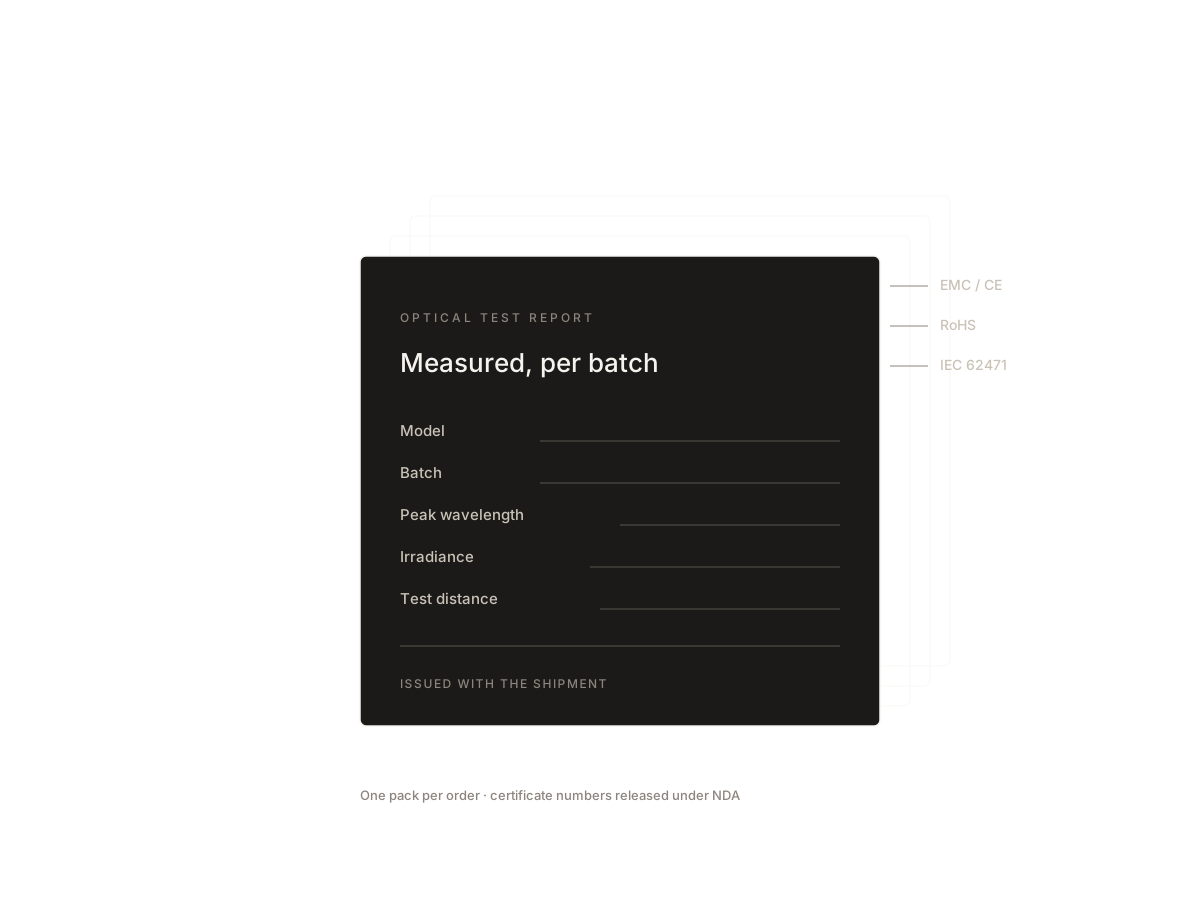
Buyers rarely discover this until a listing is challenged or a customer returns a device. The practical defence is a third-party optical test report that states the measured value for the specific production batch, not a general declaration.
- LED bin selection and rejection
- Driver current stability
- Thermal management in the shell
- Batch-level optical verification
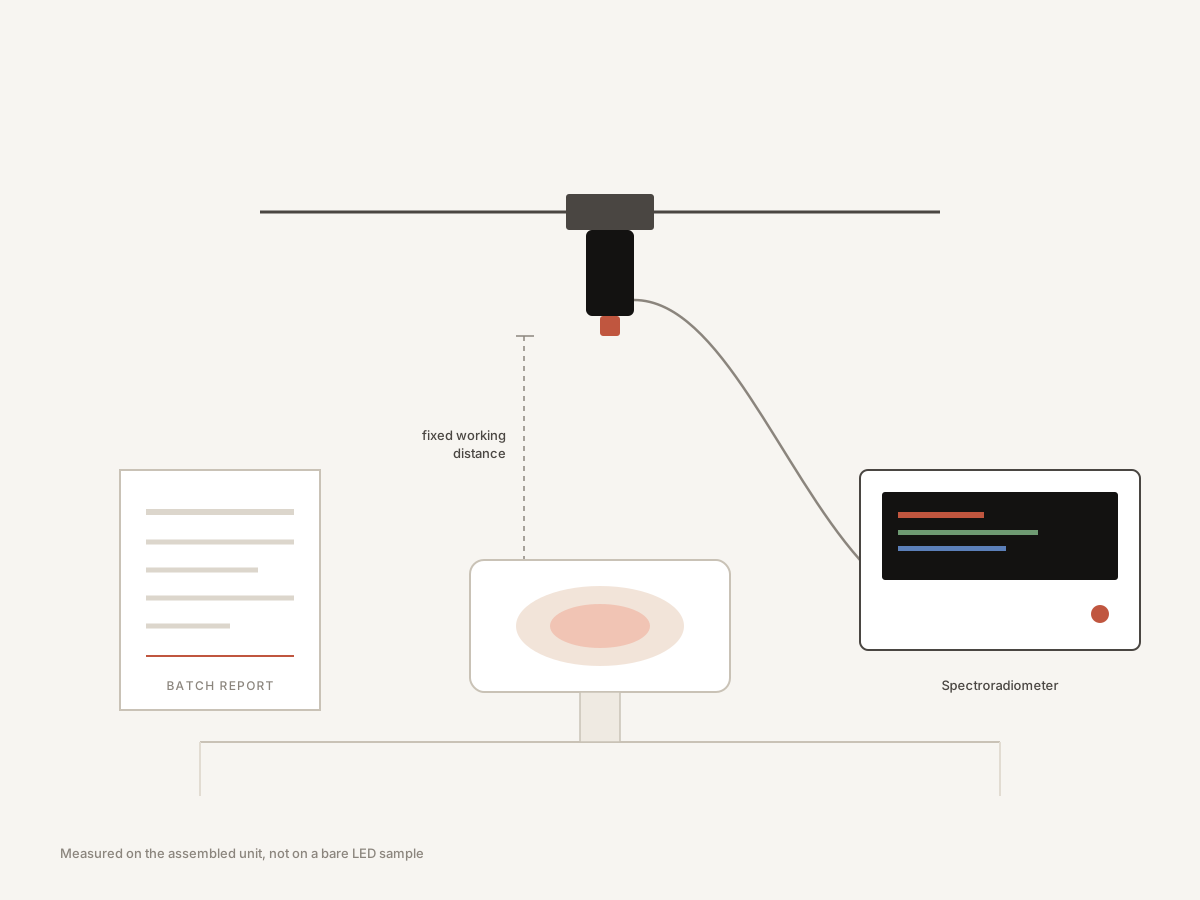
How output is verified before shipment.
Request the test reports for the model you are considering.
Tell us the model and your destination market. We send the optical test report, the relevant electrical safety documentation, and an honest note if your market needs testing we do not already hold.
Ask a technical question
If you are comparing specifications between suppliers, send the numbers you were quoted and we will tell you what to check before you commit.