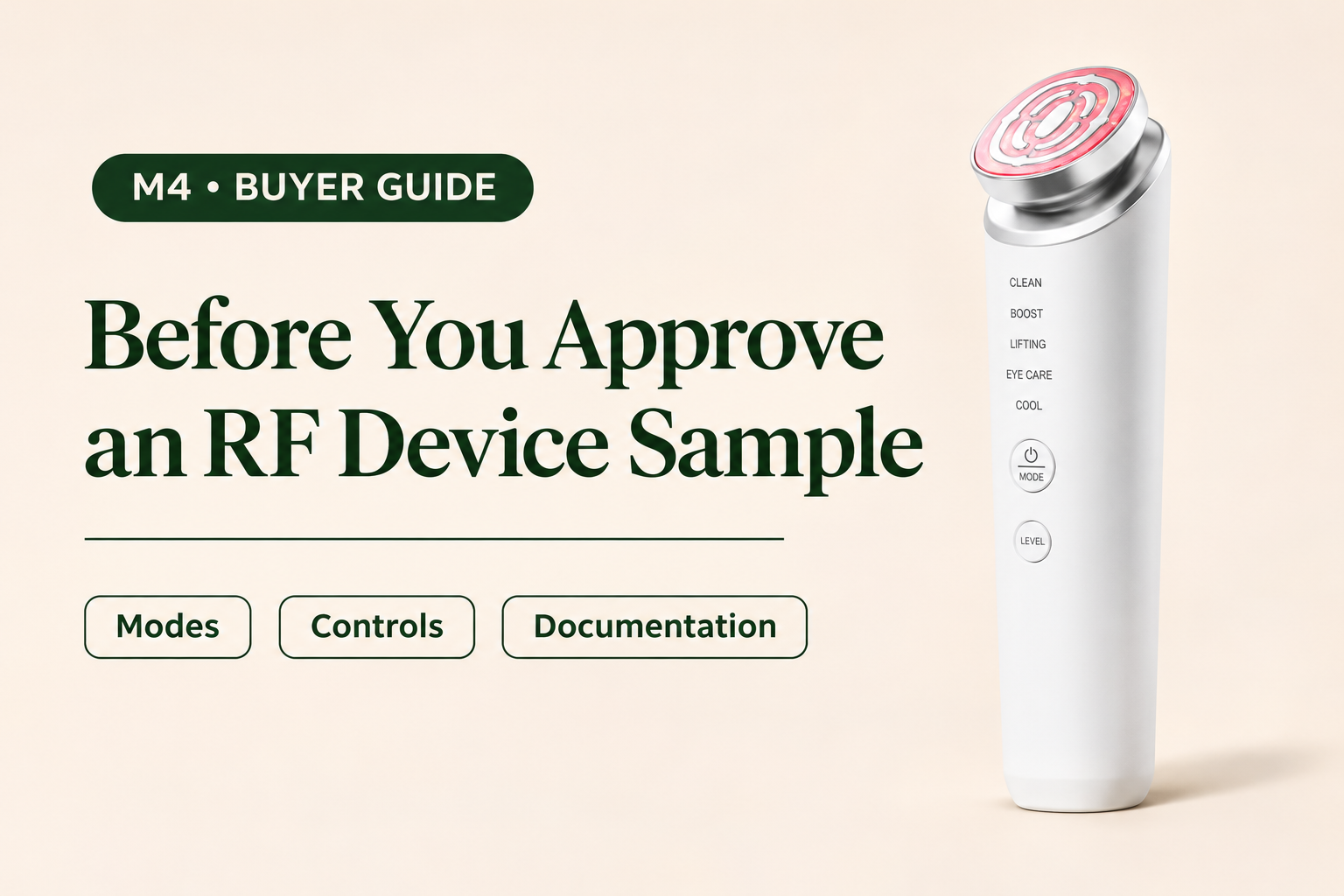
The M4 offers a useful starting point. Its supplied user manual lists five modes—CLEAN, BOOST, LIFTING, EYE CARE and COOL—and five intensity levels. Those names are a menu for evaluation, rather than evidence of a particular cosmetic result.
Build a mode-by-mode review sheet
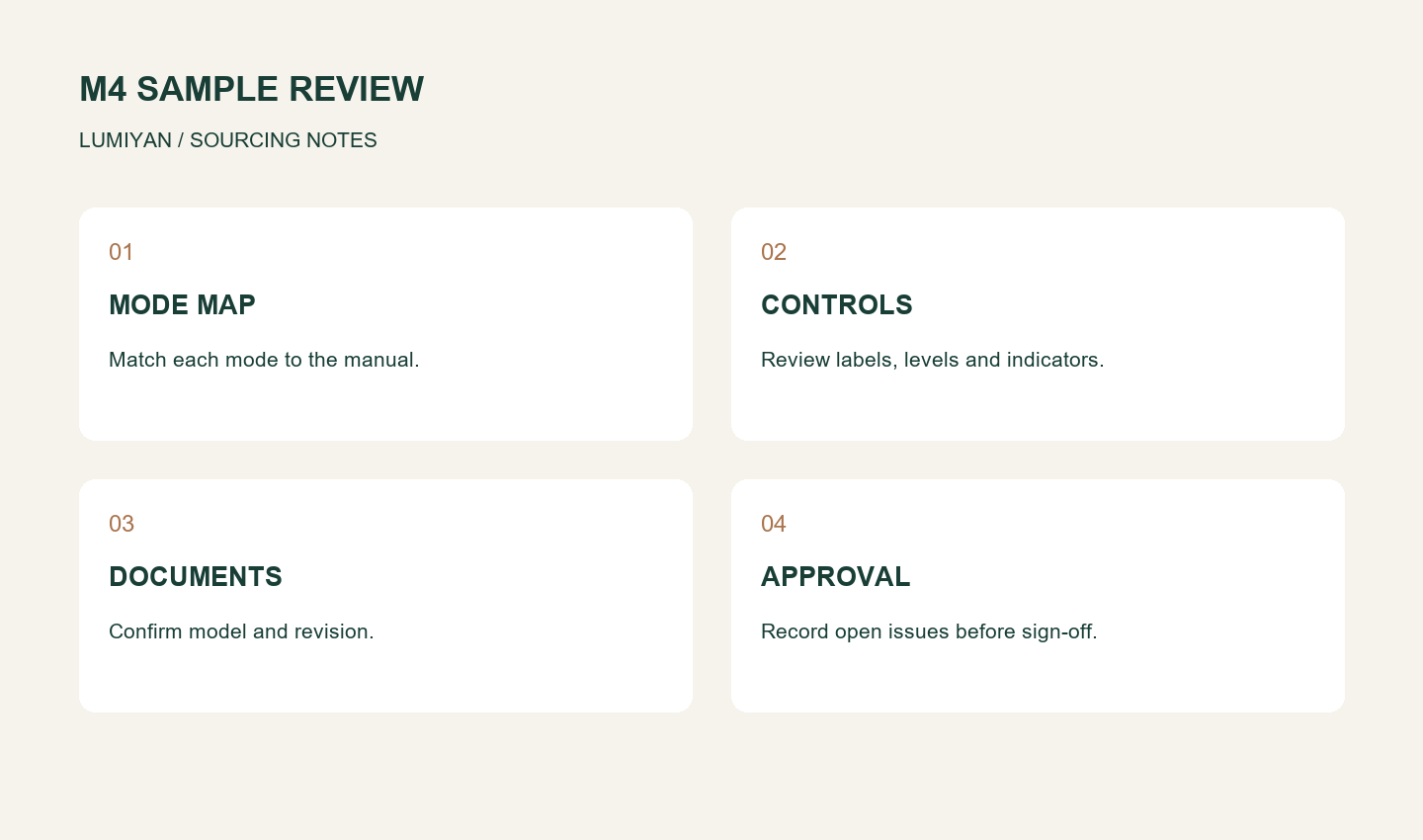
Ask the supplier to identify the functions assigned to each mode and demonstrate the controls on the physical sample. Record how the selected mode and level are displayed, how the device changes between settings and whether the written instructions match the demonstration.
Review mode-specific preparation requirements as well. The M4 manual describes different companion products or accessories for different modes. A brand should resolve compatibility questions before designing a single, simplified quick-start card. One preparation instruction should not be copied across every setting without checking.
Make handling part of approval
A product description rarely captures how easily someone can read the labels, distinguish buttons or understand the contact surface. Include those details in the sample review. Check the supplied retaining ring, charging cable and storage bag against the agreed packing list.
Have the responsible technical team review instructions concerning skin contact, movement, cleaning, charging and user restrictions. Keep demonstrations within the manual’s permitted conditions; a purchasing review is not an invitation to test excluded uses.
Freeze one specification version
The supplied M4 manual lists a 2500 mAh battery, a 5 V / 1 A charging input and a maximum power of 6 W. Use that manual as the reference for this review, and ask the supplier to confirm that the approved sample and planned production configuration match it.
Keep the model, document revision and approved artwork together. If a catalogue and a manual differ, resolve the discrepancy before printing packaging. A product page, carton and instruction leaflet should not present different specifications for the same order.
Separate function descriptions from outcome claims
The presence of RF, electrical stimulation or coloured light does not, by itself, substantiate every marketing statement a brand might want to make. Ask for evidence relevant to the exact model, intended use and destination market before approving claims. Documentation from another device is not a substitute.
Finish with a signed sample review: the approved configuration, open issues, required document revisions and the person responsible for closing each point. This gives purchasing, design and customer support a common reference before production discussions move forward.
Planning an M4 project? Contact Lumiyan with your destination market, proposed positioning and packaging requirements so the sample and document review can be scoped together.
Source note: Product details in this article are drawn from the supplied M4 English user manual. Final order specifications and market-specific claims require project confirmation.