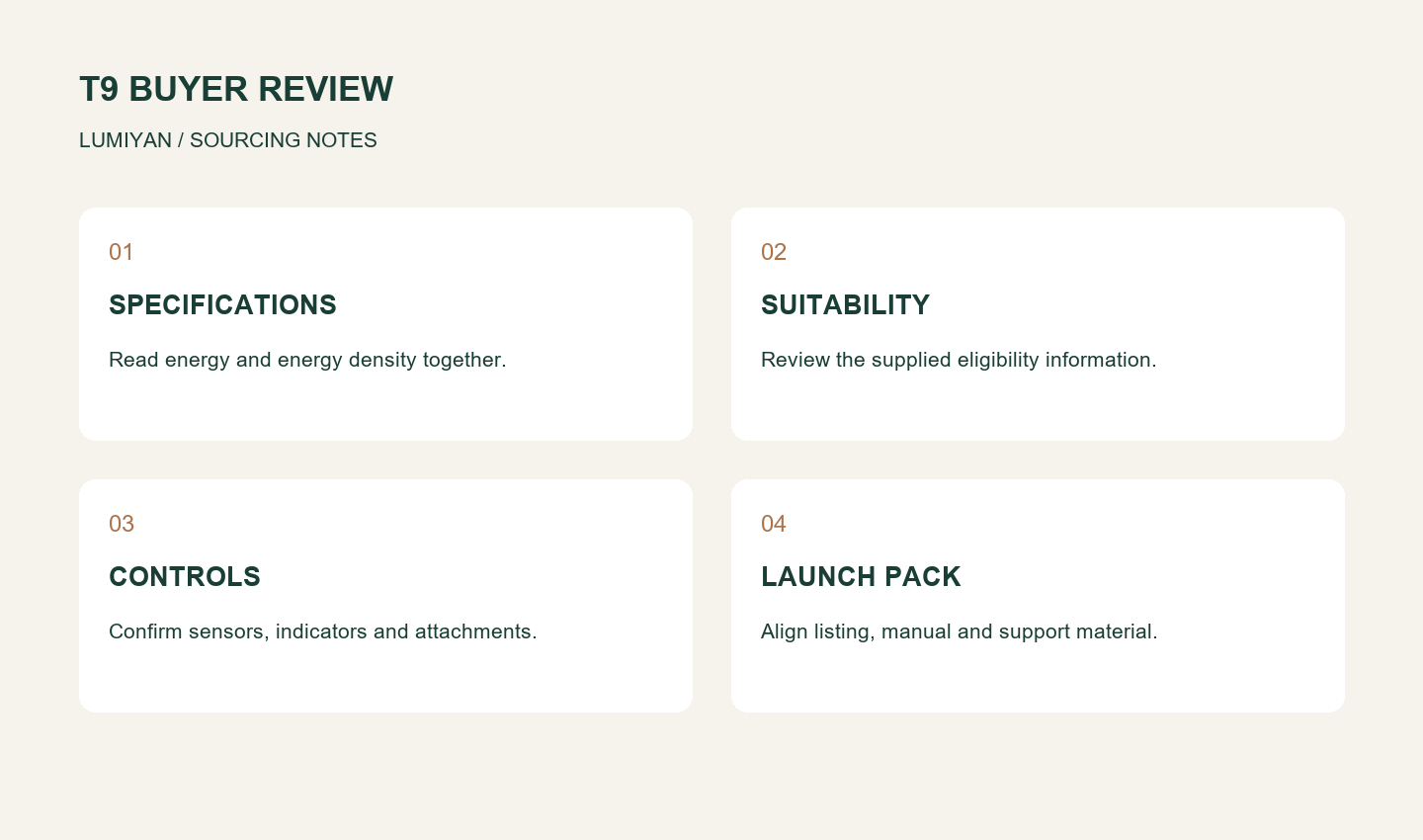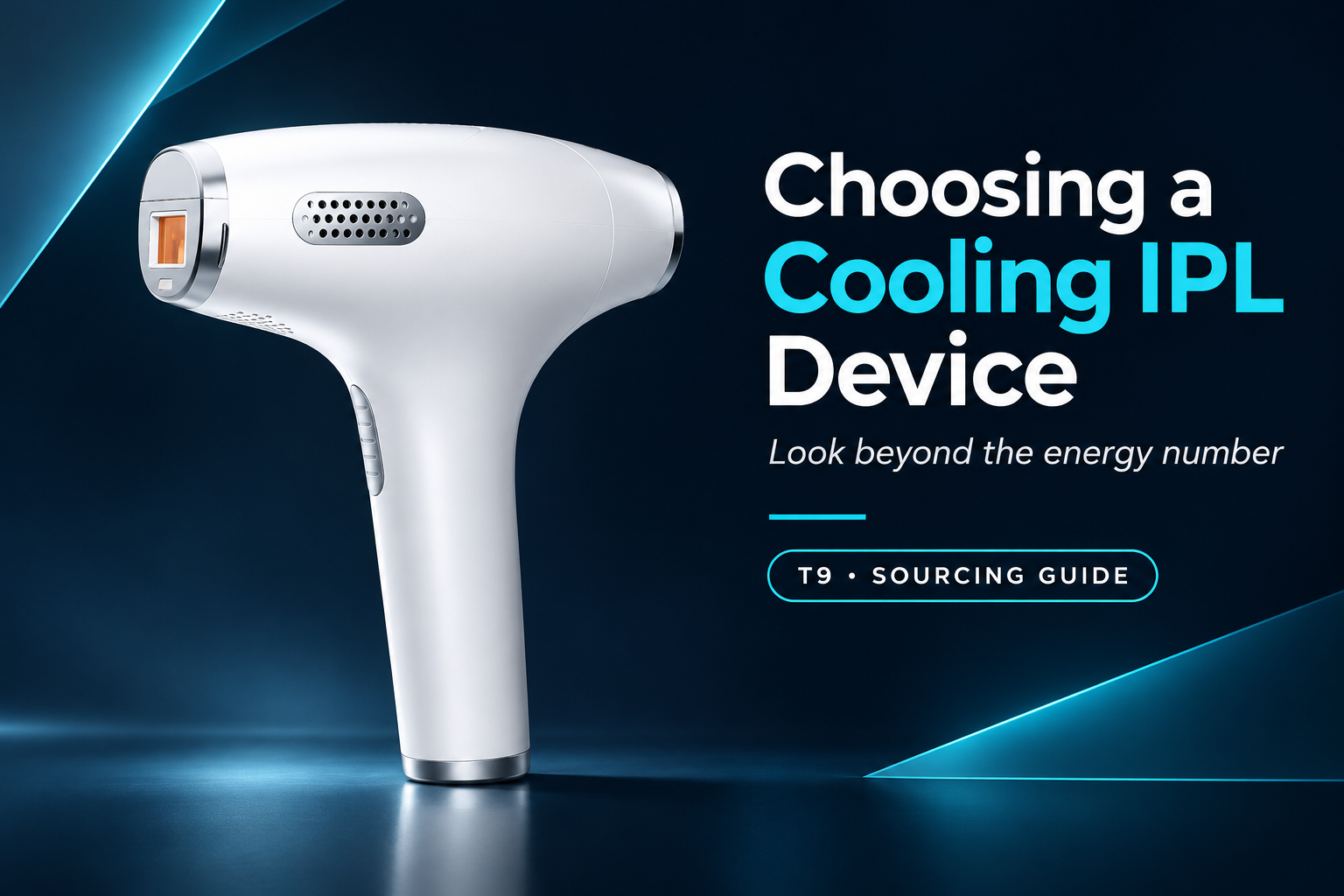
Using the T9 documentation as an example, here are four areas to settle before approving packaging or online content.
Read energy together with its units
The parameter table in the supplied T9 manual lists 13–21 J of energy, an energy density of 3.25–5.25 J/cm² and a 4 cm² treatment window. Energy and energy density describe different quantities; they should not be presented as interchangeable comparison figures.
The same table lists ten adjustable levels. Ask the supplier which settings and configuration the quoted range describes. Where different sections or sales materials use different ranges, request a reconciled specification before publishing a mode-by-mode comparison. This article follows the manual’s parameter table and does not assign output values to individual modes.
Put suitability information before broad promises
The T9 manual includes skin-tone and hair-colour suitability information, user restrictions and warnings. Buyers should make the relevant information easy to find before purchase, then keep it consistent with the manual delivered in the box.
Do not turn a suitability chart into a claim that the device works for everyone. Likewise, cooling should not become an unconditional promise of painless use or freedom from burns. The precise wording on a product page needs evidence and review for the intended market.
Review controls as a complete system
Ask for a demonstration of the level selection, contact detection, skin-tone recognition and available operating controls. Confirm what each indicator means and what the user must do when the device does not emit a flash. A sensor description should explain its role without implying that it removes every user restriction.
Confirm the supplied attachments and their intended uses against the final order. Additional treatment labels can create additional claims questions; the presence of an attachment alone does not establish that a brand may advertise a particular treatment benefit.
Prepare a consistent customer information pack
Before artwork approval, align the product page, suitability information, quick-start material, full manual and support responses. Have the supplier reconcile any inconsistent usage schedules or instructions before reproducing them. A blog article should not supply a replacement treatment schedule.
The supplied manual also excludes salon, clinic and shared commercial use from its warranty terms. For this review, position T9 as an individual home-use purchasing project. Any different use case requires separate confirmation of suitability, documentation and commercial terms.
An effective sourcing decision therefore looks beyond a headline specification. It establishes which device is being supplied, who it is intended for, what the controls do and what information will accompany it.
Contact Lumiyan with your intended market and sales channel to request the T9 specification and document review for your project.
Source note: Specifications above follow the parameter table in the supplied T9 user manual. No regulatory approval or treatment outcome is asserted here.